
 01
Millet guide
What Are Millets?
Start with the basics: millet diversity, India's story, nutrition and modern food uses.
Read guideExplore practical guides on millet basics, nutrition, comparisons, varieties, agriculture and the people behind India's millet value chain.
Twenty-six connected guides designed to build useful millet knowledge—from the grain itself to farming, processing, markets and modern food applications.
01
Start with the basics: millet diversity, India's story, nutrition and modern food uses.
Read guide 02
Understand fibre, minerals, protein, whole-grain value and why variety matters.
Read guide 03
A practical comparison of grains, nutrition context, agriculture and everyday food choices.
Read guide 04
Explore grain differences, processing, gluten context and modern food applications.
Read guide 05
Discover India's leading millet crop, its production importance and food potential.
Read guide 06
Understand dryland farming, water-efficiency context, resilience and farmer value chains.
Read guide 07
Learn about foxtail millet, its characteristics, traditional uses, nutrition context and role in modern millet foods.
Read guide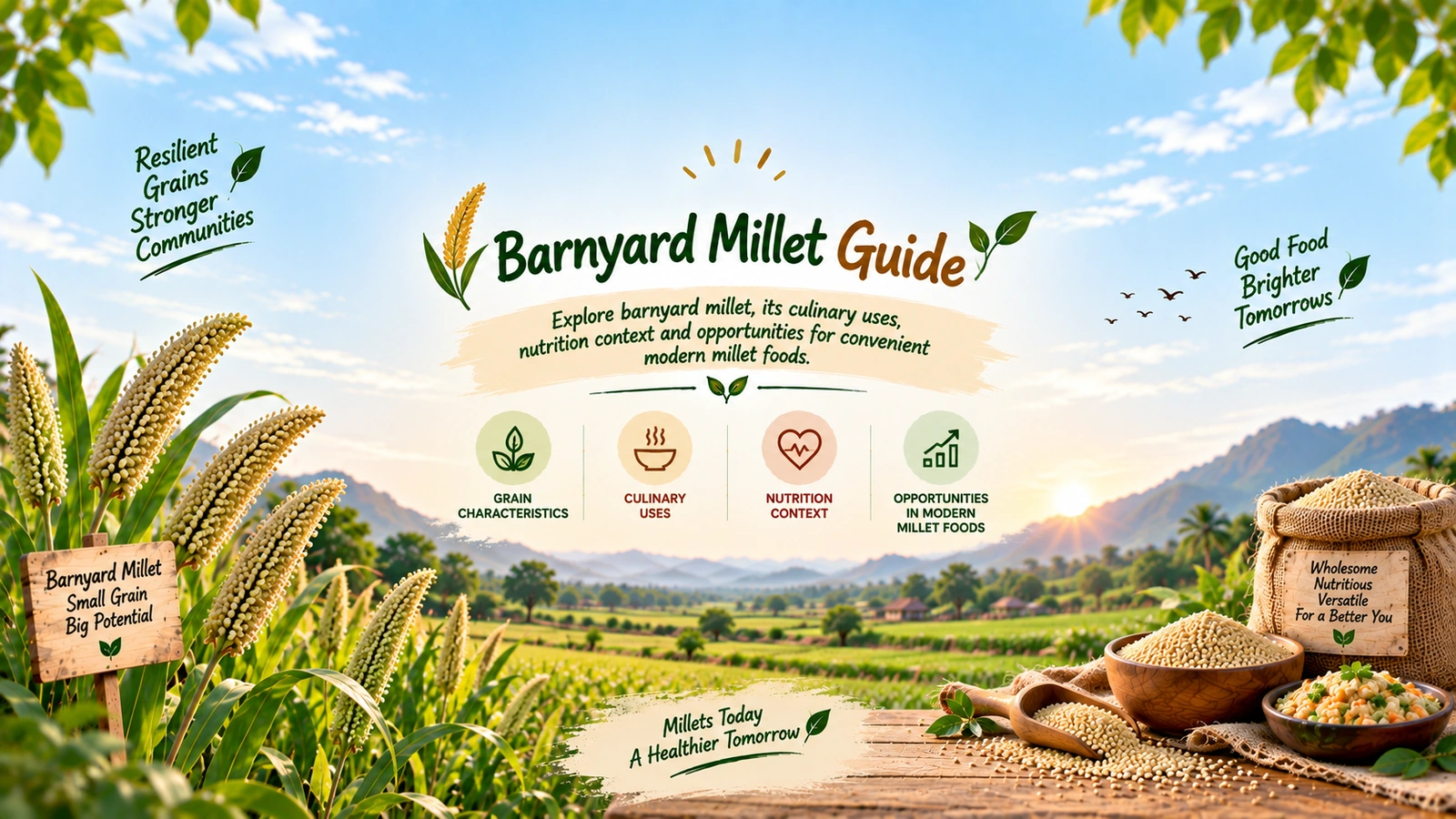 08
Explore barnyard millet, its culinary uses, nutrition context and opportunities for convenient modern millet foods.
Read guide 09
A practical guide to little millet, including food uses, nutrition context and its role in value-added millet products.
Read guide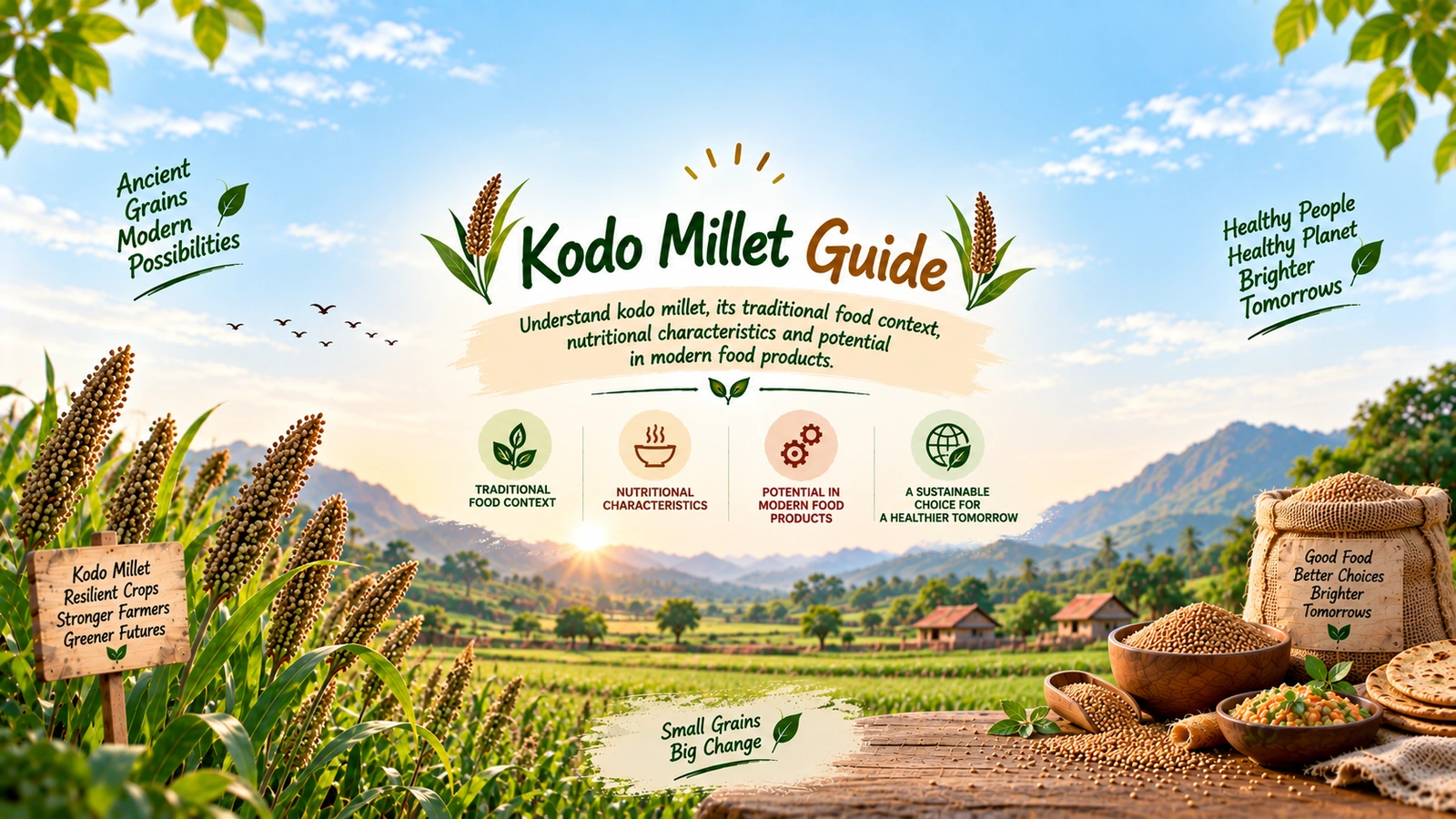 10
Understand kodo millet, its traditional food context, nutritional characteristics and potential in modern food products.
Read guide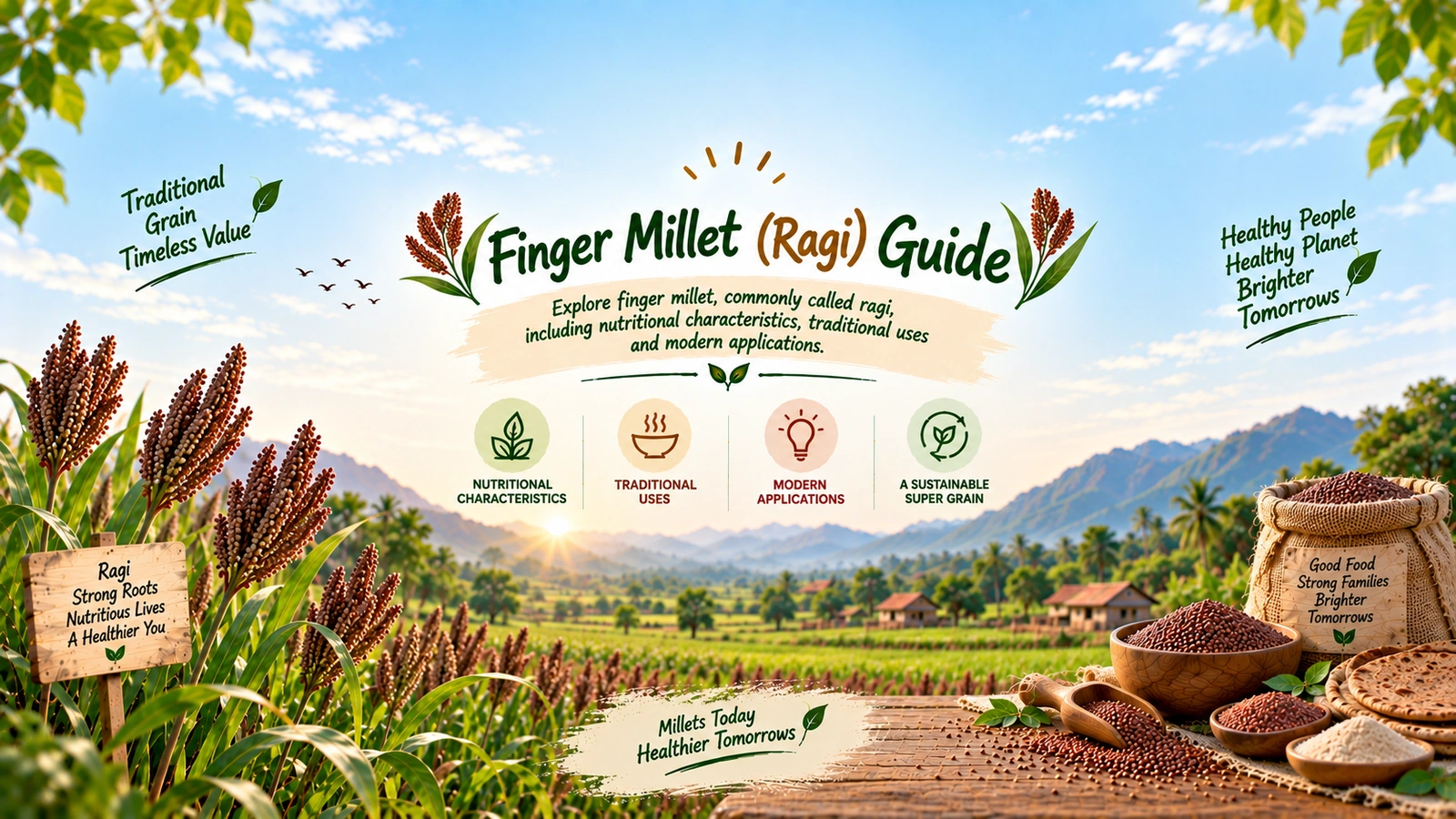 11
Explore finger millet, commonly called ragi, including nutritional characteristics, traditional uses and modern applications.
Read guide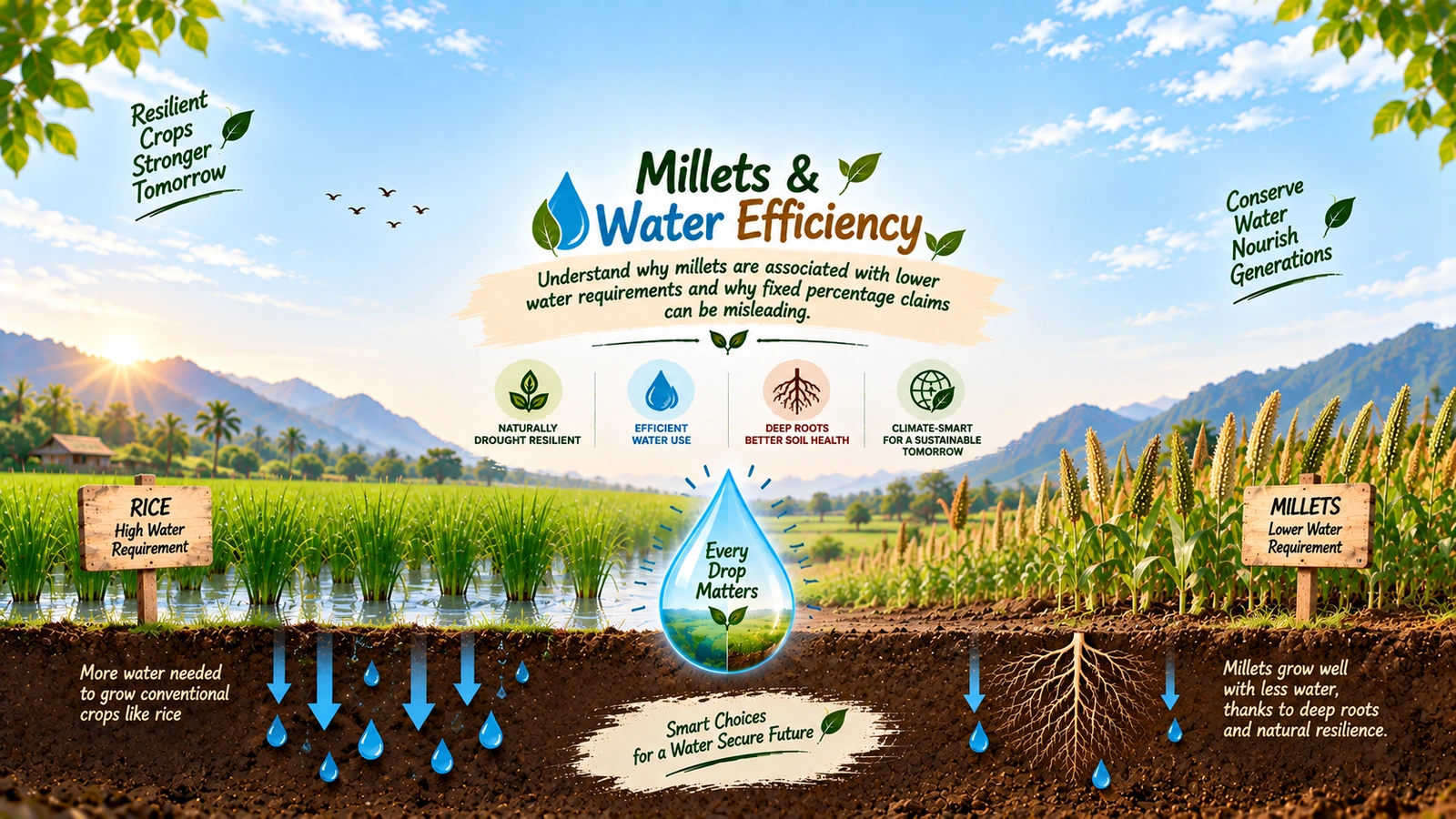 12
Understand why millets are associated with lower water requirements and why fixed percentage claims can be misleading.
Read guide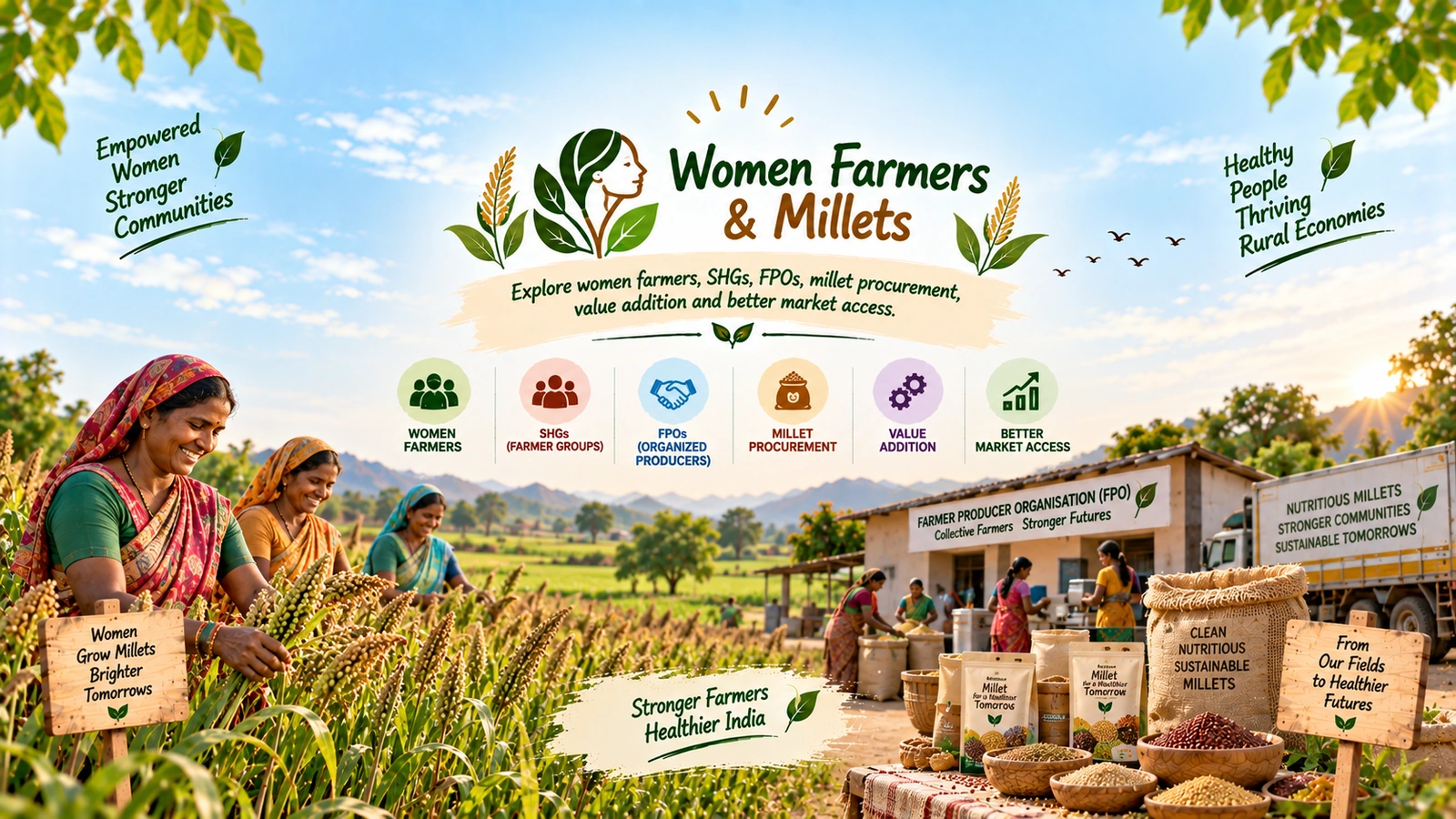 13
Explore women farmers, SHGs, FPOs, millet procurement, value addition and better market access.
Read guide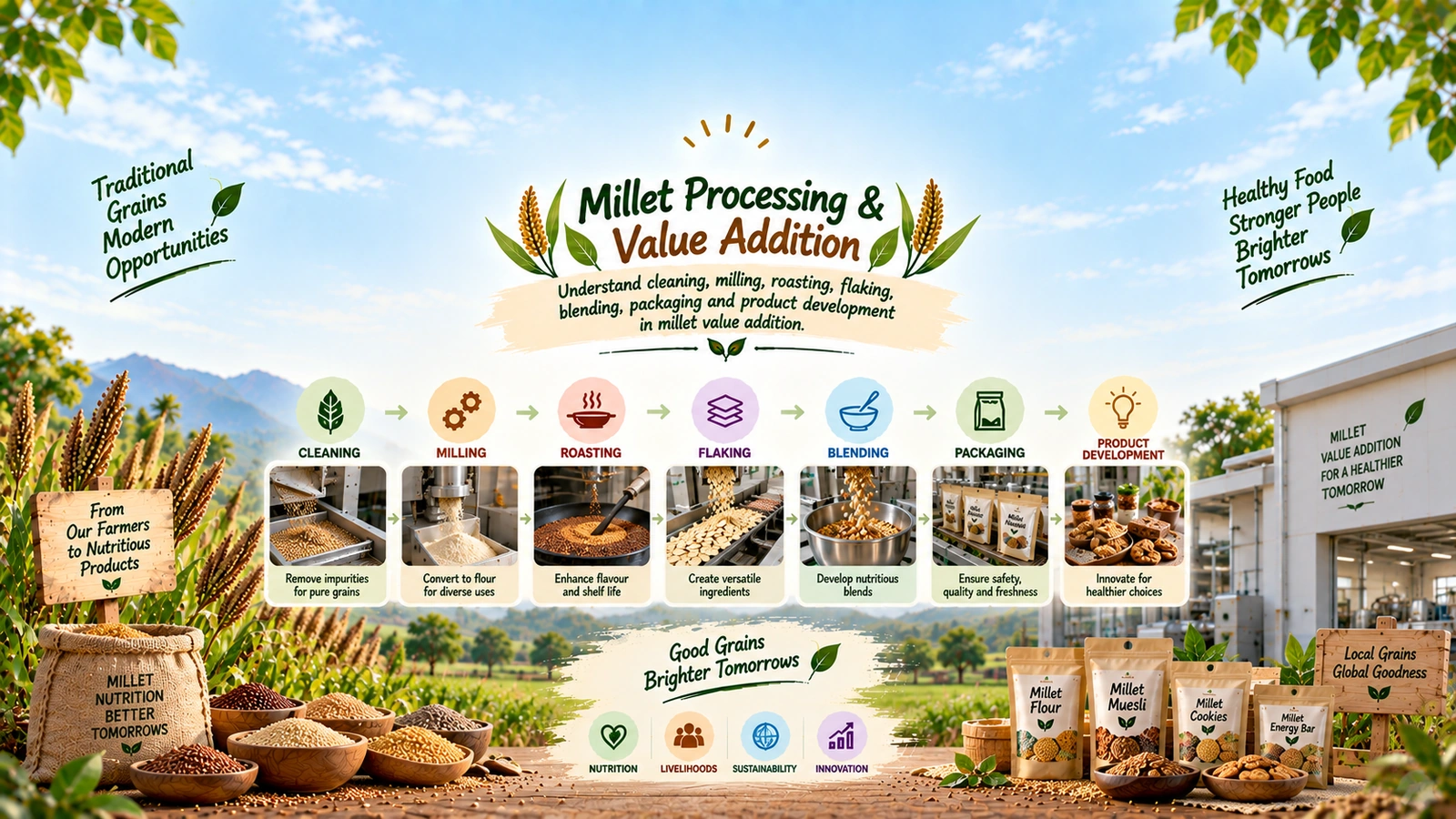 14
Understand cleaning, milling, roasting, flaking, blending, packaging and product development in millet value addition.
Read guide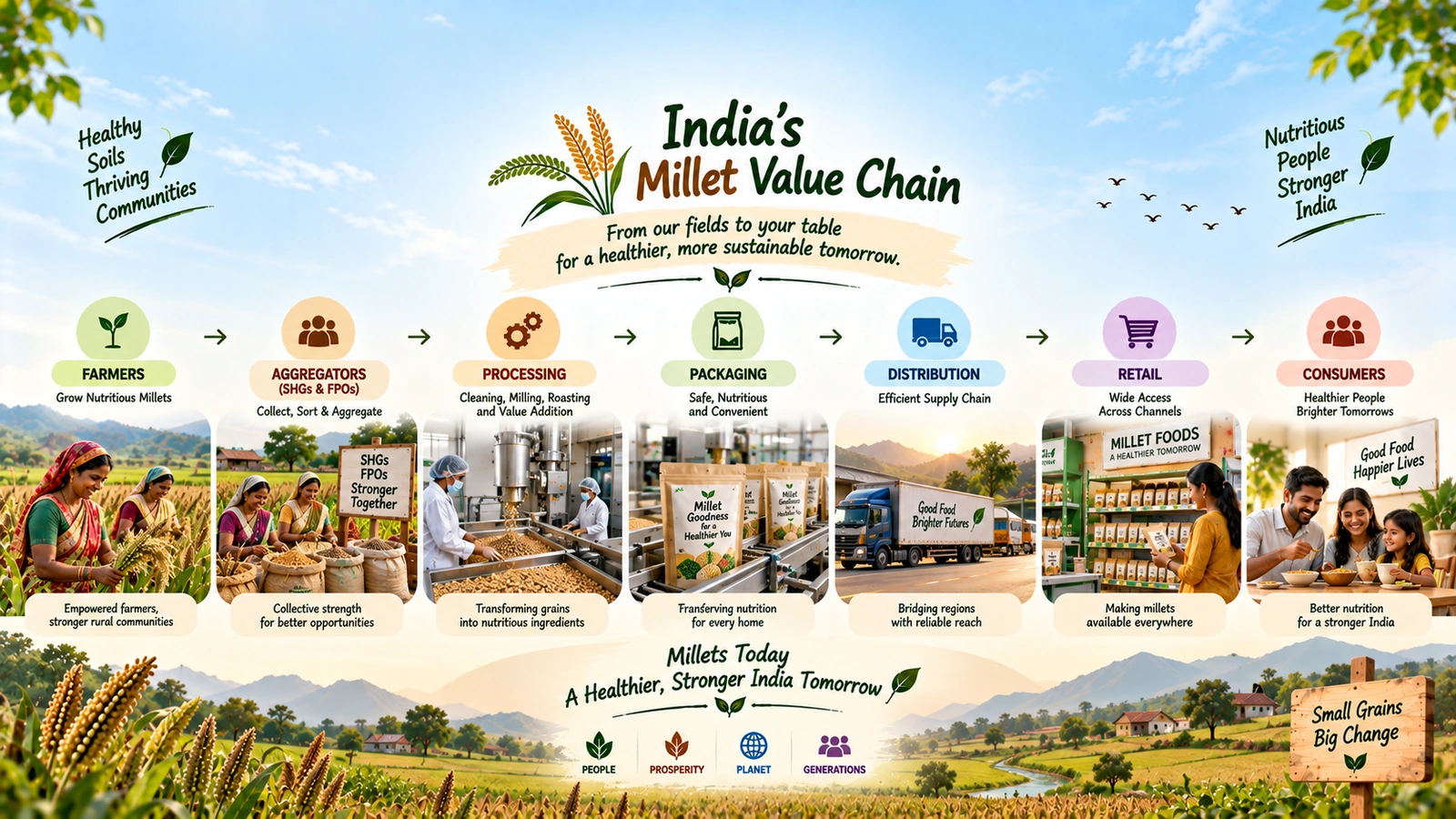 15
Map the millet journey from farmers and aggregators through processing, packaging, distribution, retail and consumers.
Read guide 16
Learn how millet can work in protein-focused foods and why the total formulation matters more than the millet label alone.
Read guide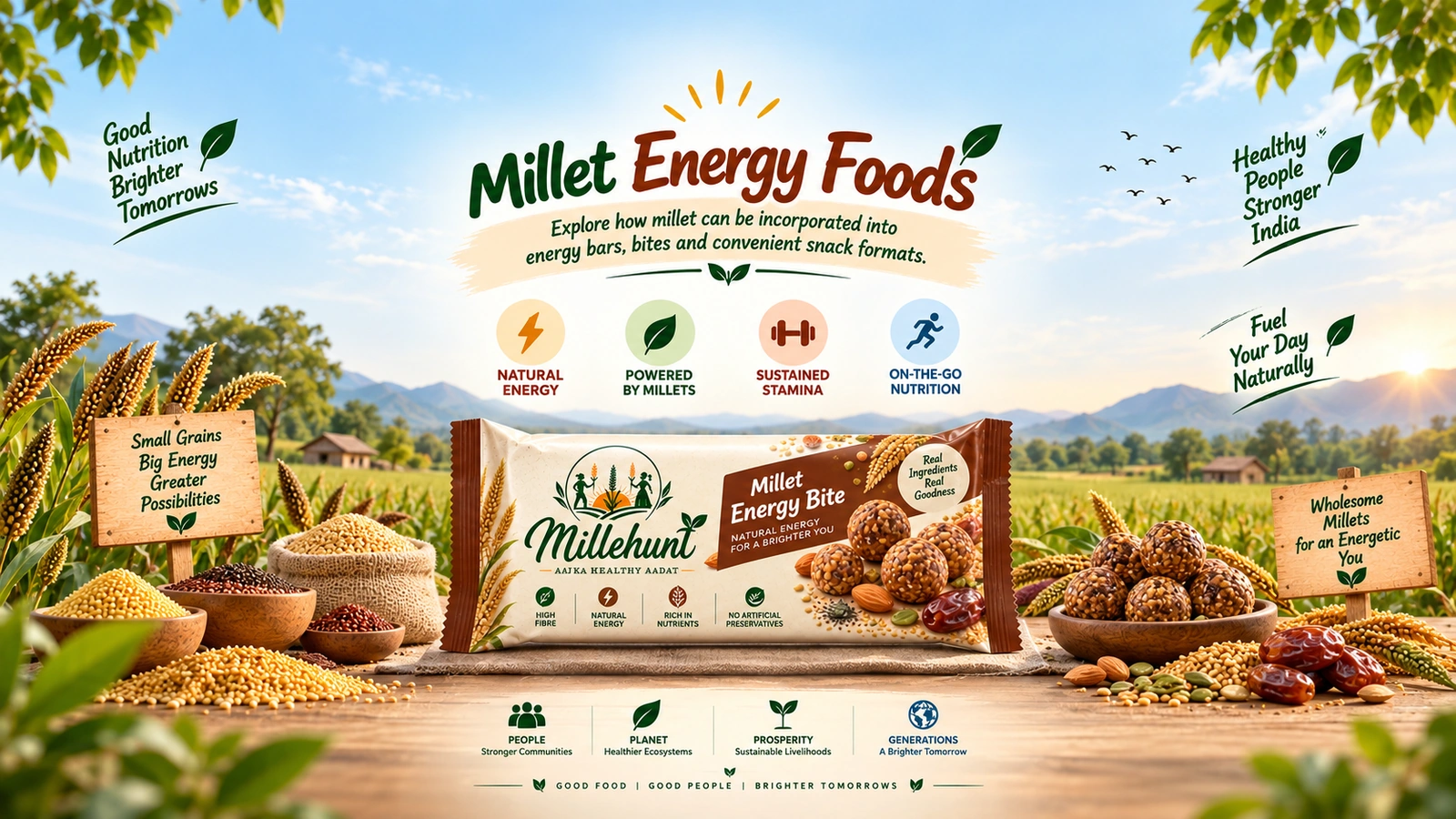 17
Explore how millet can be incorporated into energy bars, bites and convenient snack formats.
Read guide 18
Compare millet snacks using ingredients, protein, fibre, sugar, serving size, claims and formulation.
Read guide 19
Explore practical millet breakfast formats including muesli, porridge, mixes and convenient options.
Read guide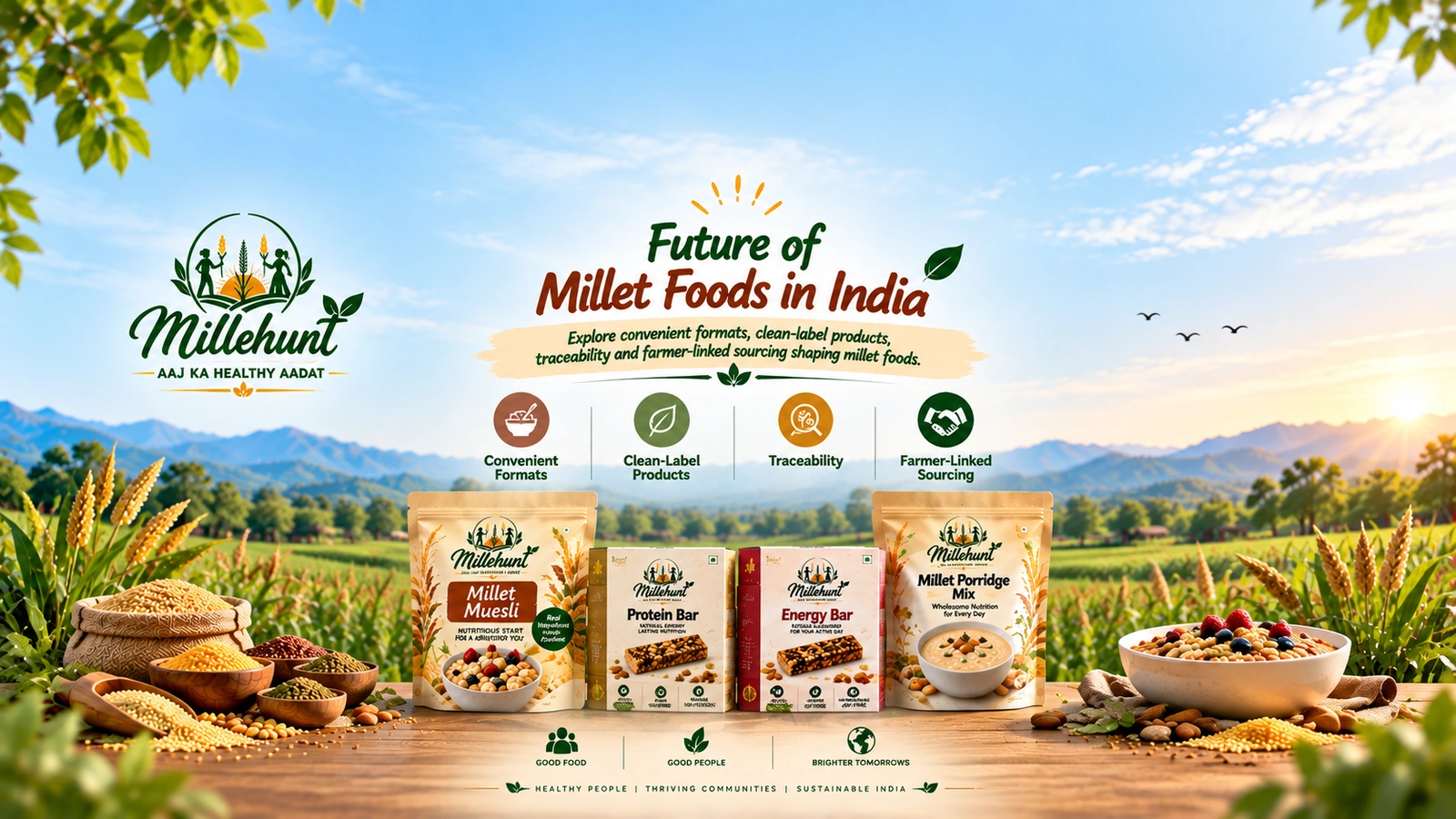 20
Explore convenient formats, clean-label products, traceability and farmer-linked sourcing shaping millet foods.
Read guide 21
Understand India's millet industry through production, regional concentration, processing, consumer demand and value-added foods.
Read guide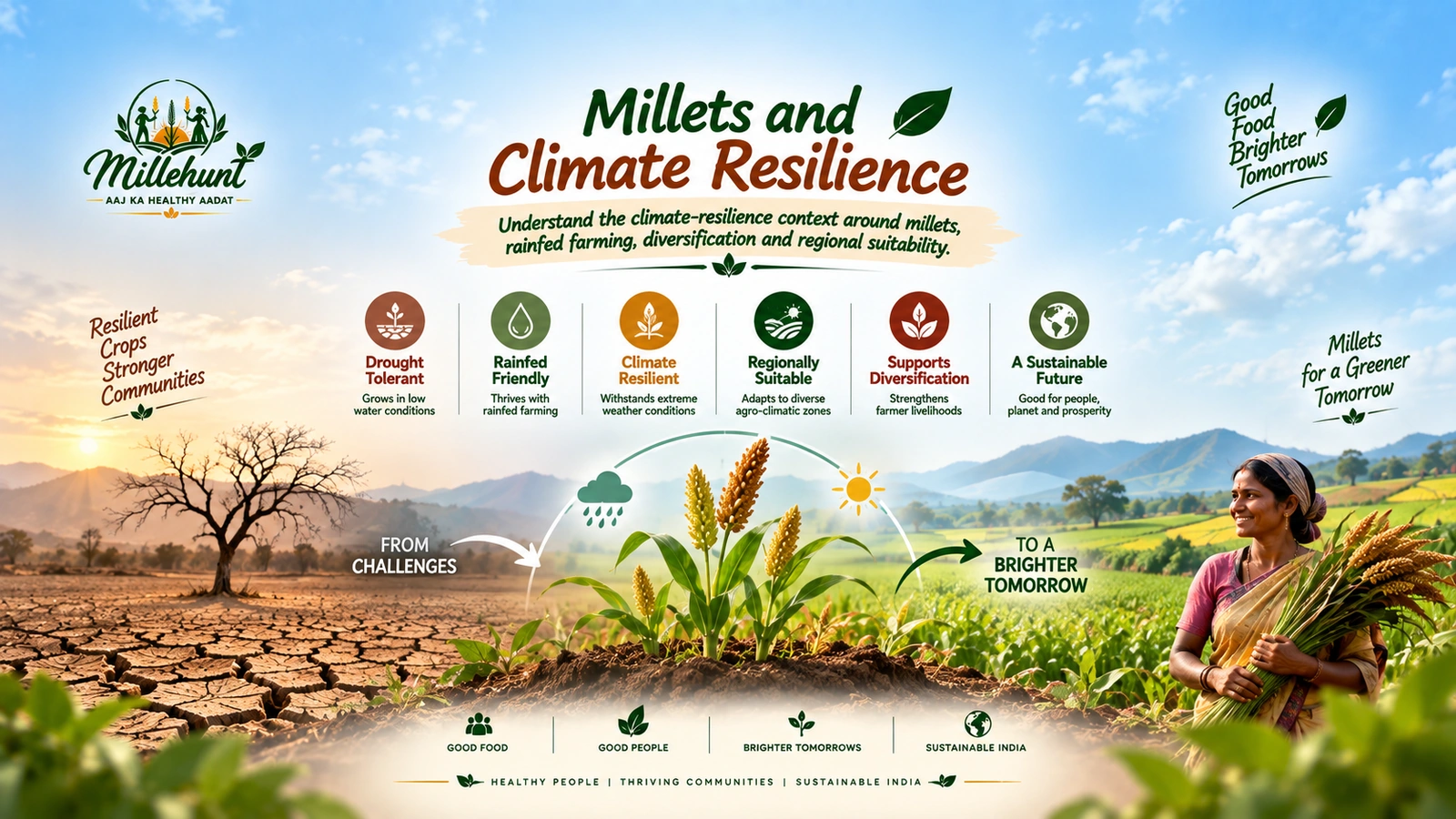 22
Understand the climate-resilience context around millets, rainfed farming, diversification and regional suitability.
Read guide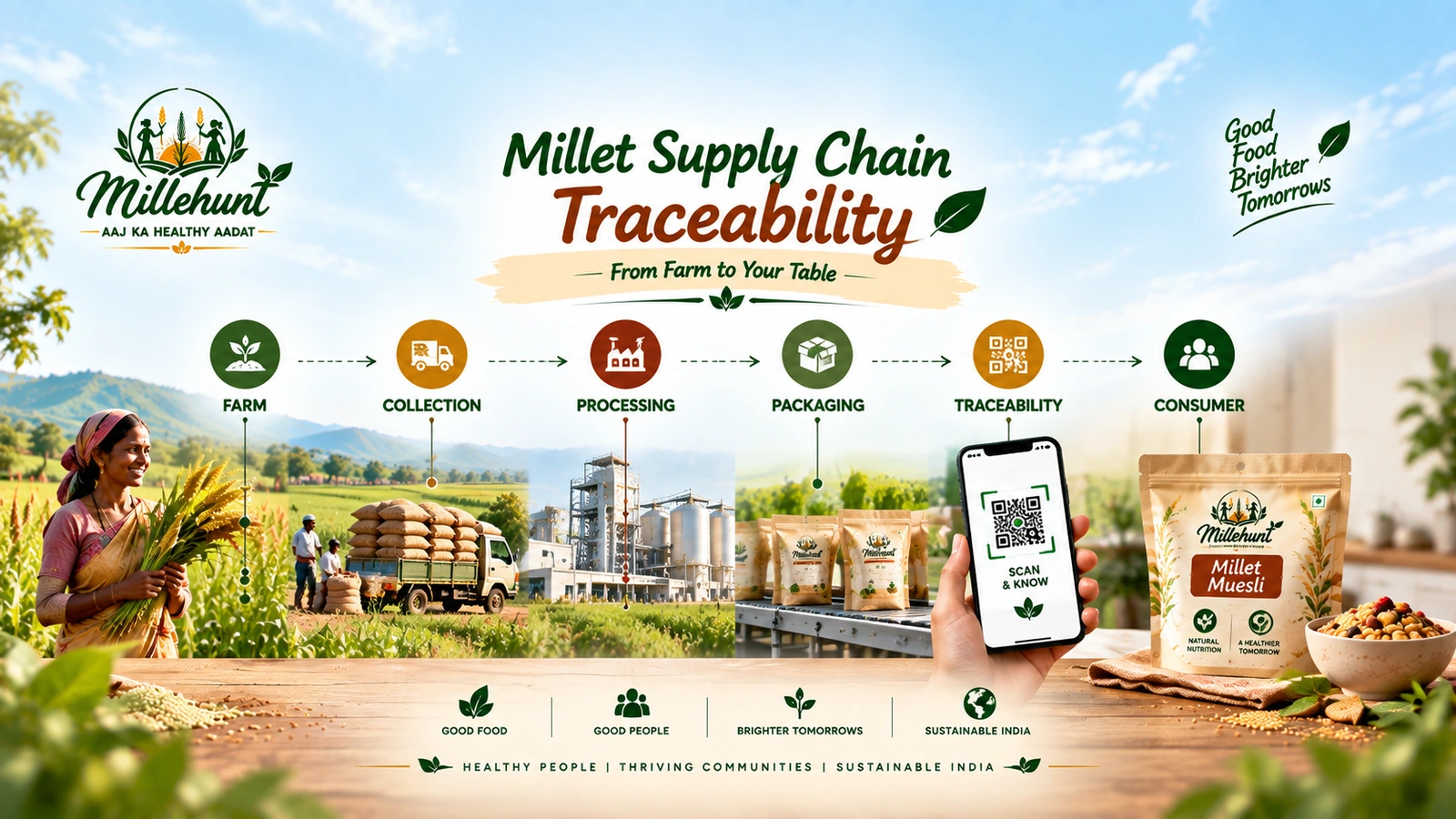 23
Explore how digital records, batch information and QR-enabled product passports can improve supply-chain transparency.
Read guide 24
Understand clean-label positioning, ingredient transparency, formulation discipline and responsible claims.
Read guide 25
Explore FPOs, SHGs, organised procurement, processing and market access for millet producers.
Read guide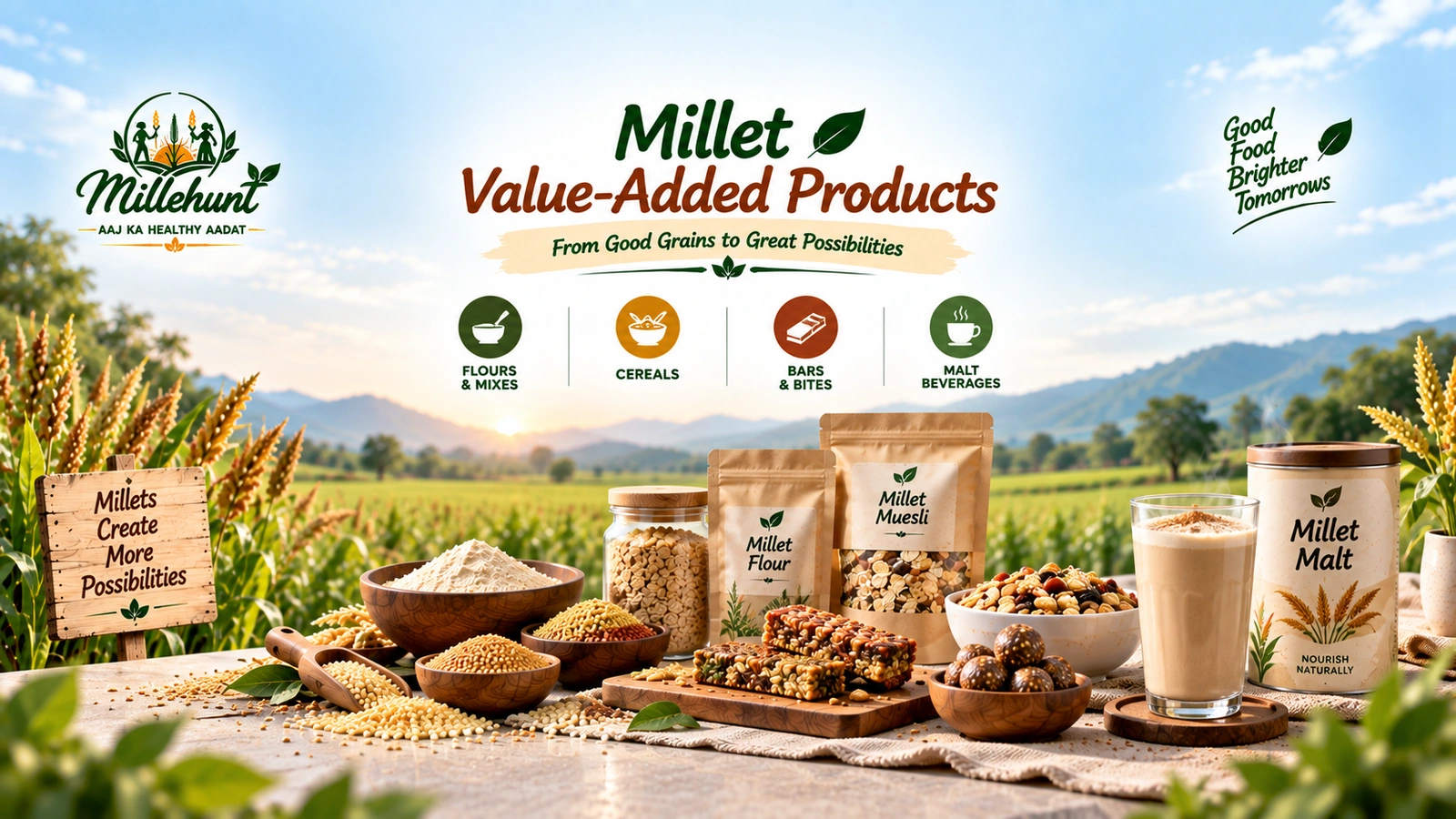 26
Explore product formats that can create additional value from millet, from flours and mixes to cereals, bars and bites.
Read guide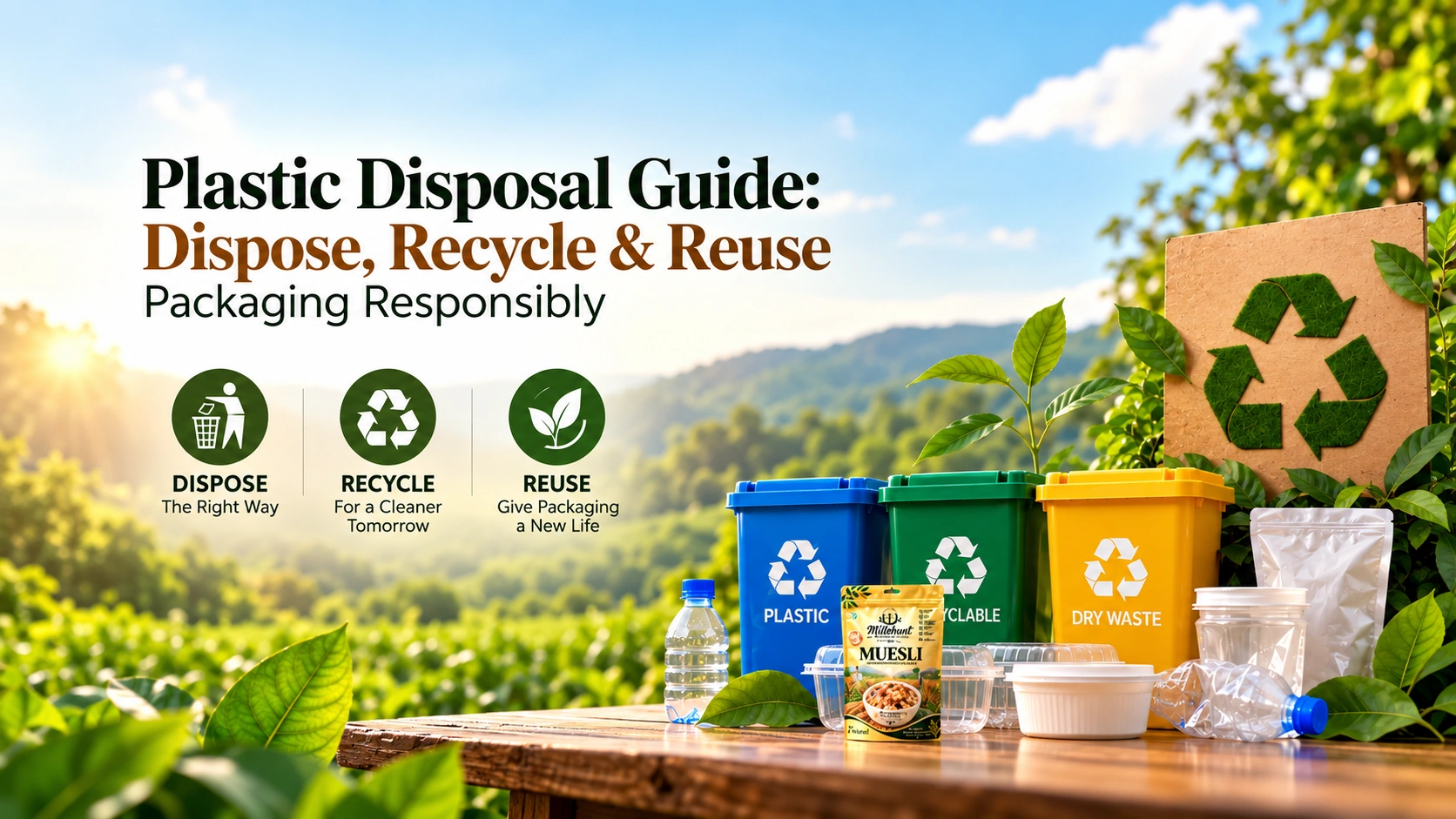 27
How to dispose, recycle and reuse Millehunt packaging responsibly.
Read guideRaavni Agrobyte is building Millehunt around a connected idea: better consumer nutrition, stronger farmer value chains and useful technology. The company pitch describes clean-label functional foods, women-centric sourcing, QR-enabled product passports and a triple-impact model for consumers, farmers and communities.
Explore Millehunt Products
From traditional grains to thoughtful modern foods—Millehunt connects everyday nutrition with farmers, communities and a more sustainable food future.
Educational content only. Nutrition and food suitability depend on the individual, the ingredient formulation and preparation. Read product labels and consult a qualified professional for personal dietary advice.